This, above all:

This, above all: To be God's best for The Coach and for Anna

Friday, August 25, 2006

UP Naming Mahal

Something interesting from one of the forums that discuss Maroons basketball: After the recent clash of the Katipuneros, while UP students and alums sang the alma mater song, one Atenean asked another why the UP hymn was in Filipino when all other school hymns were in English.

One of the UP supporters flanking the two Ateneans—no doubt also piqued that many Ateneans had invaded the seats reserved for UP—snapped: "What's more puzzling is why seven out of eight universities in the UAAP sing their hymns in English!"

Actually, the song was first written in English and titled "UP Beloved." I don't know, though, when it was translated to Filipino.

For the Maroons who only mumble when singing our school hymn, here are the lyrics (as far as The Coach and I know them; please let us know if there are any inaccuracies).

May we all indeed become what we have been called—the hope of the nation:

UP NAMING MAHAL
by Nicanor Abelardo

UP naming mahal, pamantasang hirang.
Ang tinig namin sana’y inyong dinggin.
Malayong lupain amin mang mararating
‘Di rin magbabago ang damdamin.

Luntian at pula, sagisag magpakailanman.
Pagdiwang natin, bulwagan ng dangal
Humayo’t itanghal giting at tapang.
Mabuhay ang pag-asa ng bayan.


Thanks to Bitoy and Sir A for pointing out the inaccuracies! :)

Thursday, August 24, 2006

PR runs the world

In a CSI Miami episode, an elegant, coiffed woman who ran her own PR company blustered to the police about how her fifteen-year-old daughter was innocent and was merely driven to crime by the wiles of a criminal.

Duquesne, the blonde with the nasal voice that somehow manages to squeak, replied, “With all due respect, Ma’am, that’s just PR.”

“Yeah?” the woman retorted. “Well, the world runs on PR. Even trials.”

True?

I’m thinking: Maybe even basketball? And how we address issues affecting a team? And the league? And officiating? And, most importantly, raising support?

Hmmm.

Monday, August 21, 2006

Battle of the Katipuneros 2

Seven things distracted me from enjoying yesterday's game of the Katipuneros, a game that highlighted the best and worst of UP’s gameplay.

The seven, in no particular order:


A jackhammer behind me, about 50 to 55 years old, with gray hair and a voice that drills into your skull. Whew, grandma, what big tonsils you have!

A mother of an Atenean, she was abusing anyone who dared even clap for UP, picking fights, shouting obscenities. I was kept busy pacifying the UP supporters, players’ girlfriends and parents around me who were determined to give her an eye for an eye: “Please,” I said, “just let her be.”

Her picture is purposely blurred, dear reader, to protect her identity, for I do not wish her ill. I learned later from my Ateneo friends that she is named B, a word that can mean infantile—apropos, yes? B harangued the players, wishing them bodily harm (really) and cursing with her hands. Had she vilified The Coach, this post would not be written here but in a counter-affidavit, explaining why I leapt over the railing and slugged her.

I was told much later that photos of B had been splashed recently on a website or blog run by a student of a rival school. In a series of frames that I still have to google for, B is seen praying, eyes closed and hands together; then she is seen screaming at the court, her face distorted in anger; then, in a final act of piety, she jabs the air with her hands, both her third fingers fully extended, in the unmistakable dirty sign.

“Ano?” an Atenean said when I recounted B's recent behavior. “'Di pa ba siya natuto?” Apparently not. But she did learn to be more observant of her surroundings just in case someone nefarious, like me, would again take her photos.

After the game, B scrambled to the empty chair beside me and asked politely if I took her picture. “Yes,” I said, unperturbed but startled at her sudden courtesy. “You wanna see?” She said she had seen me clapping for Ateneo and that I looked like a nice girl (meaning I would not write something like this in my blog). She said someone had taken my picture in case I would do anything bad with the ones I took of her—like show them to the rival school, perhaps? That’s when I told her that (i) my heart is with UP when it comes to basketball; (ii) I am an Ateneo alum, Batch ‘91 Law School, passed the bar, yes, therefore a lawyer and therefore no pushover, never mind that I usually sponge help off my lawyer-friends nowadays when it comes to actual lawyering—it works well with erring MMDA, too, you know, just as it works with mothers, like it did with B. When people ask me if I regret wasting fourteen years in law school and in practice before discovering fiction, I always tell them of the time an MMDA officer wrongfully accosted me for swerving. A valid I.D. issued by the Integrated Bar of the Philippines, plus tears, equals freedom from tyranny.

B smiled and said, “O.K. Thank you.” A true portrait of many a sports fan: rabid during the game, but nice afterwards. I wonder: which one is the more accurate? Perhaps both?

To be fair, there were many other UP and Ateneo fans who had been as—if not more—vituperative than B.* But since she was the one behind me, alas, she gets top billing.


Binondo (and, I was told, also Cebu, yet another fertile marketplace for game betting) pegged a +6 ½ margin on UP, which translated, of course, into wanton officiating. Sorry for this tired refrain, but, yes, drat it, the refereeing was brazenly lopsided. Fifty-one free throws given to Ateneo—the highest ever, even higher than the record 48 free throws in UP’s first game against Ateneo. Fifty-one against, what, a lousy 17 against UP! (Postscript: I know, I know. Our plays are often made away from the hoop and UP is not the most sterling in its defense, but, still, did you witness the officiating?)

We saw so many hand checks against UP, traveling by Blue Eagles, fouls by Salamat against Marvin Cruz, Ford Arao's charging (he lowered his shoulder; ergo, a charge) that was, horrors, called against Migs de Asis.


The cotton candy, which kept bobbing up and down at the end of a blue stick, was color blue. Isn’t cotton candy supposed to be pink? Yeegads, even the cotton candy girl was pro-Ateneo.


The UP walkout in the second quarter, caused by what I know is a single referee’s arrogance or stupidity. Your pick. I wanted the Maroons to just abandon the game, the sportsmanship of basketball having been sacrificed anyway to the bookies controlling the referees. But Coach Joe wanted the team to stay true to its calling, to return and play. That’s just the kind of guy he is.


Top to tip of me nervously rooting for The Coach and Coach Ramil Cruz, who, after Coach Joe had been sadly thrown out of the game, had to take up the coaching duties. I was so worried for them; it is my job to worry and get acid reflux. I was so proud of them (and so was Coach Joe; he pumped The Coach's hand later that night for "coaching well"), for they both led the team well. The Maroons ran neck and neck with the taller, stronger, older Ateneo veterans until the final quarter when, alas, Marvin became his colorless self. Marvin had played excruciatingly well in the first three quarters—he always does—which severely highlighted his lackluster** performance in the final stretch...sigh, he often does.*** I’m not assigning blame on Marvin (and this is my blog, not The Coach’s, therefore my own opinion, awright, dears? Because, yes, I have my own brain), particularly since UP was also playing against the referees (who were sloughing off our players one at a time), but had Marvin continued with his streak, it would’ve been a different ball game, in spite of.


Four intense Maroons supporters in front of me, who couldn’t help standing up despite their cushy P250 seats (P750 to P1,000 if you buy from the scalpers). They were nice girls, though, so I gave up after a while and started reading my…


…new books! Whee! Fresh from the sale at the nearby National Superstore (going on until September 17, folks), and particularly this one, Caroline See’s Making a Literary Life: Advice for Writers and Other Dreamers. It is, according to its author, for “older people who wanted to write in their youth and never got around to it.” Yowzah. That’s me, Caroline. It’s more Zen-like advice than craft, but that suits me fine. Enough to cause me to pray for more timeouts so I can read the first few chapters.

Gotta go before I ruffle more feathers. Ah, yes, the power of the written word. Matthew Broderick's character in one war movie (he was a diarist) said something like, "I learned something today. People believe in things I write. The minute I put my thoughts on paper, something magical happens. They figure if you put so much effort in writing it down, it must be true."****


* The Coach got a call sometime yesterday evening about a scuffle between UP and Ateneo supporters at the Dencio’s branch at the Araneta. I heard UP might have started it, and an Atenean might have been hurt. Sad. And sorry. For both schools, as well as the league.


** To clarify to the innumerable Marvin fans, lest they flash-mob me, I use the word lackluster to mean lacking in brilliance, which, given Marvin's extraordinariness, may mean he played only average. Which, to me, was sadly not enough.

*** Marvin is an incredible player. There is no one in today's league who can stop him. But his fourth-quarter play is killing his chances at the MVP plum. He reportedly said that he gets rattled at the end game, a condition—
choking, it is called—not uncommon among, say, golfers and tennis players. He might want to work on that: it is also killing UP's chances this year. Perhaps it's unfair to foist that much responsibility on him, it's true, but the fact of the matter is that he's one of only three veterans in the team. Circumstances are such that he could either be a savior or an ordinary player.

**** A superfluous footnote--for the Polymath.


Sunday, August 20, 2006

Excuse you


The most ingenious excuse (so far) a student gave me for not turning in his paper: he swapped cars with his brother, and his paper was in the trunk of the car the brother was using.

The most recent excuses given by two of my students for not doing homework: (i) she doesn’t have time; (ii) his previous school didn’t give students homework.

The most irritating reason for decrying a project: the other teacher teaching the same subject to another section didn’t impose such a requirement. (This, coupled with a whine.)

The most horrific thing a student told me, loudly, before the entire class: for me to tell her in advance if I will dismiss the class early so she would know when not to use her color-coded car and instead use another one, because heaven forbid that she wait for another three hours before she can drive home.

The most perplexing reason given by a student for allowing cell phones on campus and in class: because she cannot keep going to her car every now and then to check if she has messages—that would be oh so tiring.

* * *

For the teachers among us, here's a poem celebrating the creativity of our students.

Excuses (for English 103)
by Bart Edelman

I tell my students, the first day,
To make them interesting, at least,
Be ingenious, for God’s sake;
After all, this is a creative writing class.
Let’s put the brakes on dead grandmothers,
Fender-benders in the parking lots,
Computer malfunctions at the 23rd hour,
A host of wisdom teeth removals,
And various court appearances,
Preventing the young scholars
From attending English 103.
Why not push the purple envelope,
As my colleagues like to say.

I give extra credit up the wazoo
For excuses that involve absences
Due to imbroglios with exotic animals;
Such as llamas, ocelots, wallabies,
And reptiles of any kind—
The scalier the better, in my grade book.
If I hear another aunt or uncle
Who suddenly needs to be fetched
At the Los Angeles Airport Terminal,
I’ll shoot myself in the medulla oblongata,
And mind you, that’s not a pretty sight.

Let’s reward the inventive pupils,
Capable enough to concoct tales
So worth the simple telling,
They don’t ever feel the need
To complete their assignments;
They can just orally dispense them
And lather up their classmates and me
With a plot or two along the way.

Think of all the possibilities:
Pole-vaulting bank robbers on the lam,
Imploding hotels in the basement,
Exploding motorboats under the overpass,
Ecumenical orgies behind the cafeteria,
And, yes, that gratuitous alligator in the grass.

Friday, August 18, 2006

Or forever keep your peace...

The Coach and I have received a few nudges for me to continue posting about UP Men’s Basketball games. Apparently there are two forums* that provided links to this blog. I read in one discussion how my post was considered “evidence” to back up an allegation. One forum shut down a thread last Monday, and then suspended all remaining threads last Tuesday, to hose down incendiary comments and obiter dicta, hopefully not stoked further by my posts here.

Whew.

I just wanted to write about what The Coach and I look forward to each July since 1980 (for The Coach) and since 1986 (for me). Basketball is The Coach’s passion. For the game he would skip sleep. For the game he would spend time and money on training. The game has even cropped up in many a quarrel between us.

But what to write about? I hesitate to write not because UP has been losing its games, but because of the quality of those losses. Almost all of those losses should not have been, and the reasons are sad and…well, I will stop there. There’s not much I can say at this point without raising anyone’s hackles.

Still, there are other things I can share, including stuff I learned or remembered the last few days:

  • We UP alums and students love our school. We will even fight each other to prove that. Which is sad, in a funny kind of way.
  • At the stadium many of us fans cheer loudest when our team is leading, but predictably fall silent—perhaps in sympathetic dismay, anxiety or shock—when the team falls behind. Well, I say this is the moment our team needs our support the most. I say we should be noisier when our players are not doing as well as we hope. I say we support the team not because it’s winning, but because it’s our team.
  • Many fans, even the most loyal among us, don’t know enough about basketball. Yes, including me. We cheer, jeer and analyze, but very few know the technicals of the game. We criticize and second-guess from our accountability-free vantage point, but we know so little.
  • Sometimes the fan—or, yeegads, an occasional interfering parent or even a well-meaning university officer—who knows some about basketball is the more destructive. A little knowledge is a dangerous thing. Which leads me to my next point…
  • Coaches know best.
  • A coach’s job is highly political, perhaps more so for a UP coach. He has to contend with so much. More than the X’s and the O’s, he has to deal with different personalities with different perspectives and different agendas.**
  • Alumni support is more often than not a Catch-22 situation, with shades of Field of Dreams: you build it, they will come. Except that to build it—a good team—you need alumni support. Which usually doesn’t come unless the team wins games. How’s that for a Gordian knot? UP, in particular, needs our support because it cannot fund its own sports programs. Many times our fundraisers entice support by proving that ours could be a winning team. But why? Support is not a commercial transaction that requires a give-and-take. We support the team, regardless. We paid a measly P500-semestral tuition in the 1980s, dagnabbit, and we can’t give back?
  • A good college basketball program takes a few years to develop. We can never demand a strong finish in a coach’s early years unless the previous coach laid the foundation for a victory, and all the present coach has to do is take the pickings. There must be good recruiting beforehand, something that the Maroons, alas, will have to make up for since we didn’t do solid recruiting the last two years.
  • It’s a given: schools with strong alumni support are more likely to attract the better players. Alums are crucial to the basketball program. Like I told The Coach: half of the game is won outside the court and before the season.
  • The “university” portion in UAAP (University Athletic Association of the Philippines) is often overlooked and overshadowed by “athletic.” Sad.
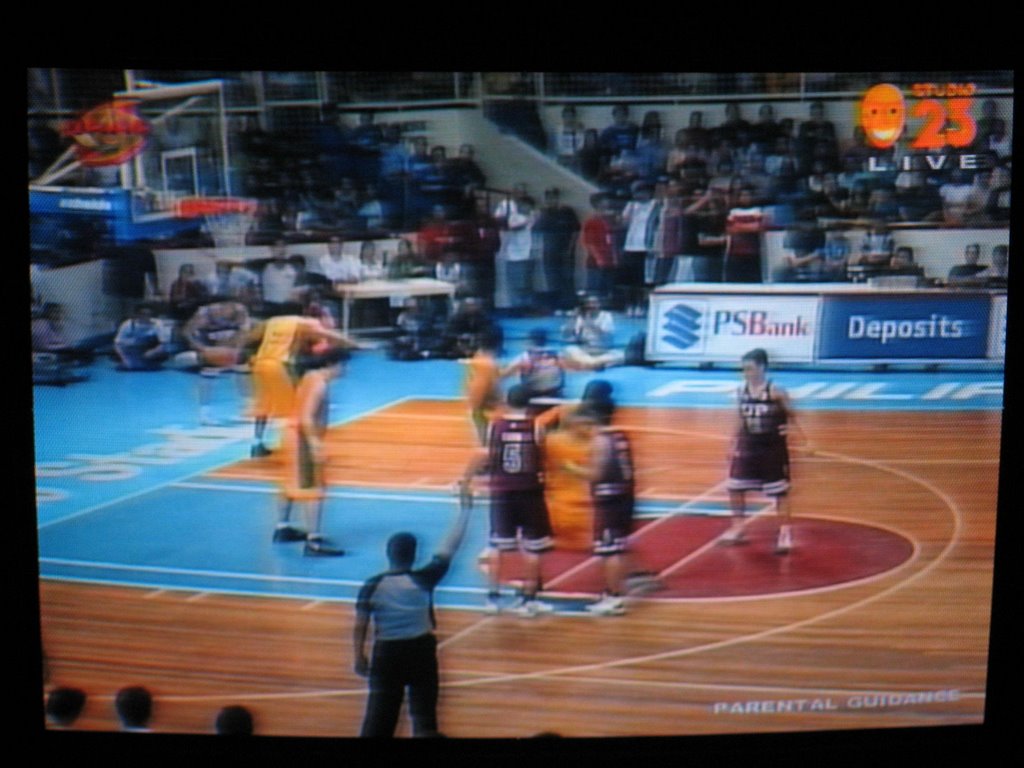
  • And, on a haha-hee hee note: the UAAP games are rated PG: Parental Guidance required. Check it out below. I can offer many reasons why, but that would violate my self-imposed gag order.


* My sparring partner Jonski, lest you flinch, I checked first if it’s all right to use forums. Heh.

** Alas, Jonski, the intricacies of using Latinate forms. I’m junking agendum and treating agenda as singular.

Tuesday, August 15, 2006

Message

My friend, Art, who won this year’s third prize in future fiction (Palanca) said he had initially plowed his way through his first drafts to plant a "message,” convinced then that a good story must contain a moral.

Should fiction contain a moral?

John Gardner in his essay, On Moral Fiction, argued that fiction is moral when it is true art. According to another writer's summary of this essay, Gardner attacks what he sees as contemporary literature's lack of moral content. In Gardner's view, moral fiction "attempts to test human values, not for the purpose of preaching or peddling a particular ideology, but in a truly honest and open-minded effort to find out which best promotes human fulfillment."

What I do not want any fiction to do is preach, such that the characters, plot and language become secondary to the writer's not-always-hidden agenda of imposing his or her particular convictions. What good fiction does is not to teach us lessons about life or about What Should Be, but to help us "weigh and consider." (Sir Francis Bacon once advised: "Read not to contradict and confute, not to believe and take for granted, nor to find talk and discourse, but to weigh and consider.")

In this sense, then, fiction will always be "moral" because it cannot help but make a statement, regardless of whether and especially if the writer was not conscious of doing so. Fiction always makes a stand: the characters, the narrator, the author, the reader—they will all have their own worldview. If the fiction is done well, then it will not sound like a sermon; neither will it present a contrived plot designed to showcase the moral lesson. The ideas in good fiction are added to our processing (which is more often than not unconscious) of what it is to be human, to belong to the human race.

I agree with Mary Gordon—a novelist and teacher—that we should look to fiction "for moral complexity, not moral certainty."

Sunday, July 30, 2006

In spite of

What does it profit a man if he gains the entire game, but suffers the loss of his soul to Binondo?

As I write this, the UP Fighting Maroons has just struggled, laboriously, from a 16-point deficit with the FEU Tamaraws, evening out at 63-63 in the beginning of the second half. TV commentator TJ Manotoc says that it was an "uphill climb" for this "undersize team."

I do not know how this game will end. But I know one thing: I am getting tired of two "in spite of's" that plague the team. Not its small size, for that cannot be helped and the boys fight as if this is of no matter. Not its youth and inexperience, for these too cannot be helped and in some ways can work for the team.

What really vex me are the inefficient, almost manipulative refereeing and the specter of Binondo eating away at college basketball.

There are way too many examples of appalling refereeing and sadly, whether by chance or choice, most of these against UP. I watched, aghast, when in the last seconds of the game against Ateneo, the referee suddenly called a technical on UP’s Marvin Cruz for delaying the game when he tapped the ball from Kramer, giving Ateneo two free throws and ball possession. Whaaa??? Marvin’s violation was his first, which meant he should get only a warning, not a technical. The other delay on UP was slapped on the bench, and hence cannot be counted on Marvin Cruz. The technical on him was heinous: it turned the tide in favor of the Blue Eagles, as did the other stupefying calls.

Worse, in the last 21 seconds of the UP-Adamson game last Sunday, with the Falcons a mere one point ahead of UP and the Maroons with the last ball possession, the referee suddenly called an atrocious backing violation against Marvin Cruz. Whaaa??? In the repeated replays we watched, The Coach and I saw how firmly Marvin settled his foot on the backcourt waaaay before the ball reached his hands. There was no mistaking it. Immediately after the game, The Coach went to the ABS-CBN OB-van with UAAP Deputy Commissioner Ato Badolato to show him the absurdity. The Coach knew the technicals of the sport inside out: he himself had been a Deputy Commissioner of the UAAP for three years and had personally trained referees. And Commissioner Ato Badolato agreed: it was clear—there was no such violation. No call should have been made. UP should have been given 21 seconds to shoot what was probably the last ball.

But what to do? Nothing more than to probably suspend the erring referee. No other remedy can be made—for in basketball, as in life, judgment calls, however bad, are part of the game.

That gruesome call likewise decided that game. With all of 21 seconds on the Falcons' side, it could waste the time and retain its one-point lead.

My only consolation is that the Binondo bookies put a +2 margin on UP against the Falcons. But since the Falcons won by only two points, then it meant that the many who bet against UP, given the favorable odds for the Falcons, lost. Nasunog is the streetspeak for it. Many of them, hopefully, burned to a crisp.

It is now the last quarter and the Tamaraws has recovered the game, putting a comfortable 12 points. The Maroons put in what the commentators call "impossible shots," narrowing the margin to 8.

I wonder what margin Binondo gave the Maroons in this game against the Tamaraws.

Funny how the margin—a word that can mean the periphery, or blank space, or outskirts—can dictate the outcome of a game. Put enough money on a team, and the referee’s vision dims, everything seen clearly only upon hindsight and frequent replays on the VHS, and probably shelved into the catch-all limbo termed “judgment calls.” Translation: you cannot do anything about it.

It is an affliction that sadly can reach players—professional or amateur—of all teams. Oftentimes players’ shots turn awry without warning, defenses crumble, and balls fly out of the court. Five years in the PBA and MBA trained The Coach’s eye to spot dead-on when any player fools around: The Coach can map out a player’s tendencies, whether he favors his left or his right, the best way to defend him, how he takes his first step and how quick it is, his release of the ball, and if he fakes before a lay-up. A player works his body into a routine, his limbs falling into its natural rhythms. It would be against the laws of his body to suddenly fumble, against his nature to change in mid-game the release of his ball. Years ago when I would sit with The Coach when he was breaking a game down to a player’s specifics, I would hear him mutter, “Mahirap magbobo-bobohan ang matalino.”

How has the long arm of Binondo reached the UAAP? When the Metropolitan Basketball Association (MBA) burst into the scene in the late 90s and even when it petered out years later, it ate into the PBA market, which, despite furious beefing up of its ranks by recruiting Fil-Ams and Fil-Shams, barely recovered. The entry of the NBA and the U.S. NCAA into our cable TV—with their flashier, better play—dug deep into the PBA’s Achilles heel. With the public’s dwindling interest in the PBA and a redirected televised attention to college basketball, Binondo turned its eye on the more profitable UAAP.

Remember the gambling scandal unearthed about two years ago in the universities? The papers reported the massive betting made by students, from grade school to college, resulting in bookies hustling after the young ones for lost and unpaid hundreds of thousands, interest compounding. This hasn’t abated, only hushed. My friend who has a grade schooler in Ateneo said some kids still pool their money together to buy the minimum P500 bet.

Executives of a Makati bank, of which I used to be a retained counsel, would bet even on teams of which they are not alums. They would place their bets on the phone, keeping an eye on a TV set turned surreptitiously to Studio 23, while the other sets rightfully monitored the stock market and the ANC channel.

The Coach himself, when he was a Deputy Commissioner, was not spared from the tentacles of betting. When he and the other commissioners chose the referees of every game, they had to resort to an almost cloak-and-dagger system: they would call in several referees to suit up, confine them to an undisclosed room, confiscate their cell phones, and in the last minutes before a game actually starts, conduct a raffle to determine which three referees will call the game. The three are kept closeted by the commissioners while The Coach would explain to them the plays of the competing schools, as well as players’ tendencies, so they would reduce any judgment calls. In this manner the Dark Force would be hard put to invest its money on any one referee. Still, some shady characters, as well as a few school or team officials, would attempt to penetrate the raffle. How distressing that the “play” part of college ball, the part which should celebrate the game and the university, is being infected, insidiously, by big business.

Sometime into the season when he was still a Deputy Commissioner, The Coach changed his cell phone number, the only time he did so, so he could avoid calls that would only cloud his judgment. He and I prayed for God’s grace to help him all throughout. It was not easy for him and the other commissioners: juggling complaints on one side, monitoring the refereeing and staving off Binondo, which at one time plunked over P150 million on an Ateneo-DLSU game.

There. The Tamaraws just won by 8 points over my boys. My heart sinks. The commentators say that the eight rookies of UP will spell a “scary team” in the years to come. It is of little comfort to me.

I wonder: as Coach Joe Lipa talks to his boys, how will he encourage them? How will he tell them to continue to fight a good fight, in spite of? They only want to play: this is a game they love, sometimes even beyond school.

I wish Binondo would just let them play.

Friday, July 28, 2006

Faith, love, time and my friend SN

My friend SN was in a spiritual funk, a path I’ve been on several times. I’d like to share portions of what I wrote her, rewritten to suit this space.

Dear SN,

I'm sorry to hear you feel like you're "away" from God. Perhaps there are some things in your life you need to sort out. Our relationship with God is sometimes affected, strongly, by our relationship with our earth fathers and mothers. The father and mother wounds we have dictate how we see, appreciate and deal with God the Father.

Don't worry about not being "diligent." Our relationship with God is not a set of do's and don'ts—reading the Bible, praying, reaching out, etc.—no, never like that. Ours is really a relationship: dealing, talking, searching, hurting, processing, understanding. We deal with God out of the overflow of our hearts as to what He has done for such as unworthy as we.

Sometimes what we lack is awe, for a love as unfathomable as His.

And we lack reverential fear, at what He is and what He can do.

The world is too loud: it drowns out His still, small voice. But do not ever think that the God of the Old Testament has changed: He's still the same—powerful, majestic, holy. God of the OT flexes a muscle and the man holding the ark dies. He speaks, and a world is formed. This world that chooses to hurt Him so, He can wipe off the universe with a single word, a thought. But He chooses to love us gently, inspite of.

Reading His Word is just like wanting to hear a beloved's voice. Approach it that way. Know that the author wrote it for you, you whom He formed with such care, attention and love.

The Lord is a big guy. He can take all your ranting, and not blink. I've had numerous occasions to just rail at Him, to wrestle with Him, but He knows me so well, as He should—He made me, after all—and what I do doesn't surprise Him. But what I do can hurt Him, grieve Him.

When I run away from Him, it is not so much that He gets angry or wrathful and brings the heavens down on me (as He could, but doesn't), but it's more that He gets grieved at the willful rejection. Like we would, if we were to be rejected.

God is a loving Father and desires no more than to be yours. For us He made an entire world, and peopled it for us. What we do—fellowship, worship, quiet time, prayer—is really just our response to Him. It is not borne out of guilt or duty, but of love.

Ours is a heart-to-heart relationship, a spirit calling out to a Spirit. God always looks to the heart, not to the letter of the law. My prayer is that you would really hear Him speak to you, to encounter Him in fresh, new ways that will make your relationship with Him flower and just come alive, that you would be so sensitive to Him that you would hear Him, always, on the street, while you work, as you sleep.

Love,
J


Tuesday, July 25, 2006

From the Happy Box, #1

I keep three Happy Boxes (and may need to set up one more), each storing whatnots that make me happy or remind me of happy times. Stuff like the sand dollar my friend/poet Jeneen found in Bais, Negros in our weekend break from the 2001 Dumaguete workshop, or the 1986 ticket to the UP-FEU championship game that UP won (The Coach bought that ticket for me in the heady first year of our romance), and my first passport issued in 1991.

Good for the soul. And for remembering how incredibly the Lord has blessed The Coach and me through the years, how faithful He has been.

I saw this strip in one of the Boxes. Yes, humor abounds even in the worst of a writer's times. Hee. Laughter is so good. I wish you a belly-aching laugh, at least once this week.

Sunday, July 23, 2006

Over the rainbow

My flight home to Cebu last June rocked. Literally. Turbulence shook the plane and rain spattered the windows.

But not before I caught a rainbow in living color.

If you'll look closely, you'll discover another rainbow to the left, a faint echo of its more vivid cousin, diffused by the clouds and rainshowers.

Glorious.

Left and Write

Two nights ago The Coach grumbled as he tap-tapped on Samwise, our iBook. “Janet, where are the letters!?!” he reproached me, as if I was singularly responsible for the loss.

I am. Some of the letters, see, I have wiped off the keyboard in my earnestness, and The Coach—whose post-World Cup/NCAA relationship with Samwise is mostly limited to checking peyups.com or if Championship Productions slashed the prices of its coaching videos—needs the letters to navigate his way around the Web.

My experience with the keyboard was different. Like the many among you who spend dedicated time on the computer, I hardly look at the keyboard; my fingers fly over the QWERTYs as I write. Some time ago, whenever I needed to encode the phrase left and right, I ended up writing left and write. Thrice. Whoa. Samwise the Wise uprears: You, who want to be a writer, write!

Yessir.

As for The Coach’s woes, gee. Help? Are there letters I can buy and stick on the keyboard?

Will bug the trusty Adel Gabot, Mobile Philippines editor and certified MacMan, as soon as he comes back from his well-deserved honeymoon.

Friday, July 21, 2006

From our shelf: Borrowed Finery

Do not read Borrowed Finery like I did: in spurts, while waiting for the elevator or lining up to file our tax return. This book needs to be savored and draw in, like clear morning sunshine or sea breeze. Not that Paula Fox’s memoir reveals a life free of wounds, for there are many of these, more than a young girl’s fair share, no matter how precocious she is.

Paula approaches her past with the same intelligence and sensitivity she employs in her writing. The almost disjointed telling highlights her life as a giveaway child, shuttled from one place to another, as far as Cuba, where there ''was no one who said [her] name for hours at a time.'' Her spare prose does not hold back; it pierces in its quietness, free of judgment or reservation, unabashed. I recoil at the emotional roulette she suffered in the hands of her parents-playing-at-being-parents, easing only when Paula’s humor cuts in, thankfully, as it frequently does.

I love her Uncle Elwood, a minister, the father many of us would wish we had, who took “thinking walks,” who read to her and surrounded her with books, who took her to the grave of Mark Twain, and to the house of Washington Irving to exorcise her fear of the headless horseman.

Though I was bewildered at the sudden fast-forward to the time Paula meets the daughter she put up for adoption, I was quieted by the shades of hope and healing in the memoir’s closing moments. More of that light, please, for Paula Fox, now 78 and discovered and celebrated anew by the literary community.

Some of the luminous lines I enjoyed. There are many more for you to unearth.

Time was long in those days, without measure. I marched through the mornings as if there was nothing behind me or in front of me, and all I carried, lightly, was the present, a moment without end.

...

After downing a few drinks, [my father] would fail in love with his own voice, theatrically honeyed, filled with significant whispers and pauses. He was in thrall to his voice; his thoughts stumbled behind.

...

Could you escape from a divorce the way you could from a marriage? Was it possible to get a divorce from a divorce?

...

I grasped consciously for an instant what had been implicit in every aspect of daily life with Uncle Elwood—that everything counted and that a word spoken as meant contained a mysterious energy that could awaken thought and feeling in both speaker and listener.


* Thank you, dear Polymath, for giving me this book. Your giving was unexpected, and all the more charming and precious for that.


Twilight, Shmilight

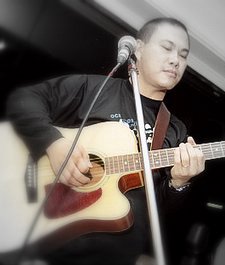
My friend, Jon, an editor and a guitar artist now based in Davao, is my keeper when it comes to the English language. It is he who spars with me about words: how healthful—not healthy—should be used in describing options or food, why a rebel who returns to the fold is called a returnee, not a returner, and what is the impact of impact.

A few weeks ago I emailed him something about twilight, and, true to form, he asked if I was maybe referring to dusk, which question sent us both running to Wikipedia. And found us these:

Sunset, also called sundown in some American English dialects, is the time at which the Sun disappears below the horizon in the west. It should not be confused with dusk, which is the point at which darkness falls, some time after the beginning of twilight when the Sun itself sets.

Dusk should not be confused with sunset, which is the moment when the trailing edge of the Sun itself sinks below the horizon.

Twilight is the time before sunrise or after sunset when sunlight scattered in the upper atmosphere illuminates the lower atmosphere and the surface of the Earth.

So: it is sunset when the edge of the sun hits the horizon, dusk when the sun has gone below the horizon but before the sky becomes dark, and twilight is just after sunset or before dawn when the sun is below the horizon.

Coolness. Now that we got that straight, I can now say with all intellectual honesty and accuracy that I come alive at dusk: this kind of dusk that falls outside our window. Fiery. The reds go into my bloodstream and wake me up.

I’m like a vampire, a term Jon uses loosely around me. I agree, even when some of my diver friends tag me a “child of the sun.” What the heck: I am sleepy in the mornings and half-awake in the afternoons.

Good morning, folks. It’s midnight.


Happy spiritual birthday, Jon. The memory of that walk we three shared 23 years ago--you, me, the Lord--remains fresh, whole, beautiful. I love you,my dearest brother.


Thursday, July 20, 2006

Morning has broken

When I was told years ago that marriage would turn my life upside-down, I didn't think it would mean this: that we'd sleep at 6 in the morning every day and wake up at 2 in the afternoon.

That is our schedule these days, what with The Coach’s mandatory night shift at Air 21 so he can cope with his UP and St Stephen coaching duties in the afternoons.

And this is the view that greets us before we sleep in the wee hours.

Tuesday, July 18, 2006

Battle of the Katipuneros

My two beloved alma maters slugged it out at the Ninoy Aquino stadium last Sunday. Either way I'd win. But when it comes to the hardcourt, I'm a Maroon. (I'm an Eagle only in the moot court.)

I should feel bad we lost. But it's hard to be morose because my boys fought well, as well as they could given the breaks of the game and terrible refereeing (and, no, I'm not just saying that; The Coach just finished splicing the videotapes of the game to ferret out the too many bad calls on UP).

Binondo bettors had given our boys an advantage +4 margin, underscoring yet again the stark 3-inch differential between the two teams. My classmate at the Ateneo nicknamed our team the UP Midgets. He’s an RTC judge: who am I to tell His Honor to get lost?

The refs gave our boys a hard time. We were losing players, fast. Coach Joe Lipa wrung his hands in frustration. “Jerry!” he barked, calling out to the Maroons support staff handing out towels to the players evicted from the game. "Ikaw na nga ang maglaro! Inubos na nila players natin!”

The refs gave Ateneo an all-time high 49 free throws and slammed on UP a record 8 or so calls on traveling. Three or so years ago, DLSU Coach Franz Pumaren stormed the UAAP Commissioner’s office because the refs gave the opposing team 39 free throws—almost statistically improbable. And now the refs gave the Eagles 49 free throws? It meant Ateneo had to work for only a measly 50 points to win.

UP edged out Ateneo in other areas—rebounding, assists, two- and three-pointers. The game, alas, was decided on the free throws.

The Coach is careful not to give in to the conspiracy theories floating about; he’d rather think the refs were simply not trained well, pointing out that there were also a few (only a few!) bad calls on Ateneo. Others, however, unabashedly made connections between the timing and quality of the calls to the +4 betting in Binondo.

The Peyups forum, as expected, is crammed with catcalls and cussing, in which I am tempted to join if not for The Coach’s equanimity about the loss. The Coach knows they still have to work out some of the Maroons’ bad decisions, like not boxing out, and acknowledges the team’s youth. But he is proud of his boys’ hustle, of Galen Cacha, who was just pulled out from the Intrams and started learning how to play only six months ago, yet became a rebounding force. (I think I heard The Coach or someone call him Cacha Gotcha. Never mind that Cacha missed 8 free throws.)

The past two-and-a-half days, The Coach wore down our VHS, playing and rewinding by the microsecond the UP-Ateneo game, checking for flaws in the refereeing, as well in the UP play. I told him my heart was breaking listening to the endless rewinding of our loss, and he said, “Why? We fought a good fight.”

Big hearts, big fight. What more could a fan want?


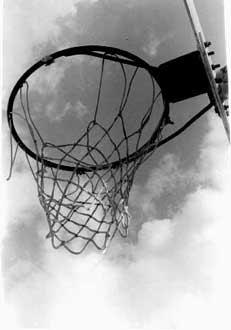
* Picture of the basketball hoop is not mine. Caught it in one of my trawling trips but, regrettably, can't remember from whose site I borrowed it.

Monday, July 17, 2006

Monday, July 10, 2006

Maroon-ong

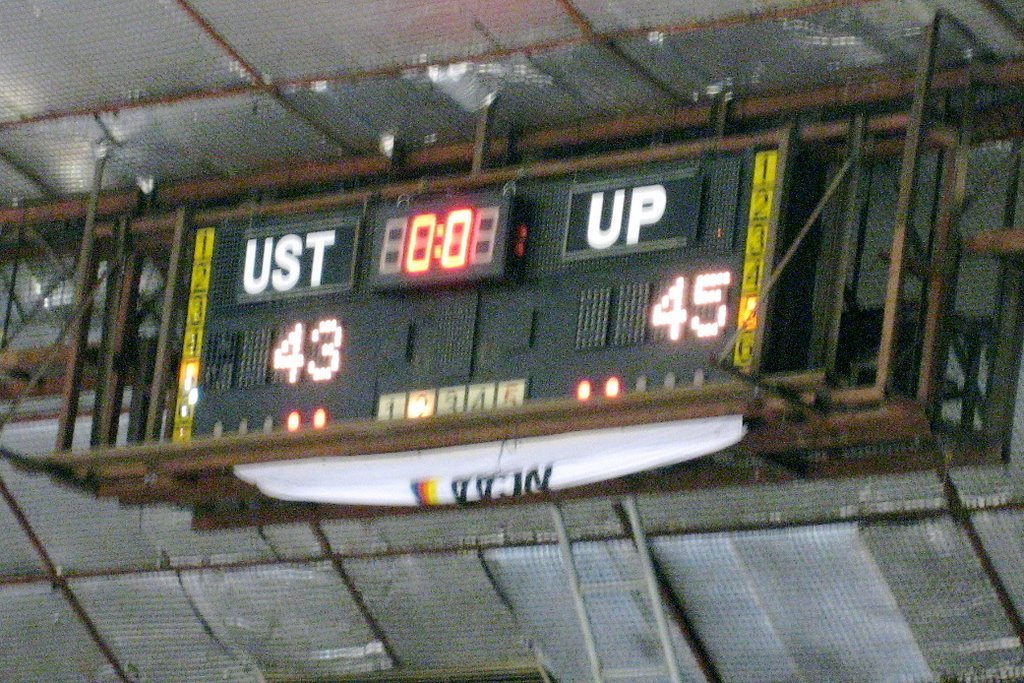
The boys were not meant to win. Bookies and bet makers in Binondo heaped on them an advantage +8 points, which means those betting on them would win even if these boys lose the game with not more than an 8-point margin.

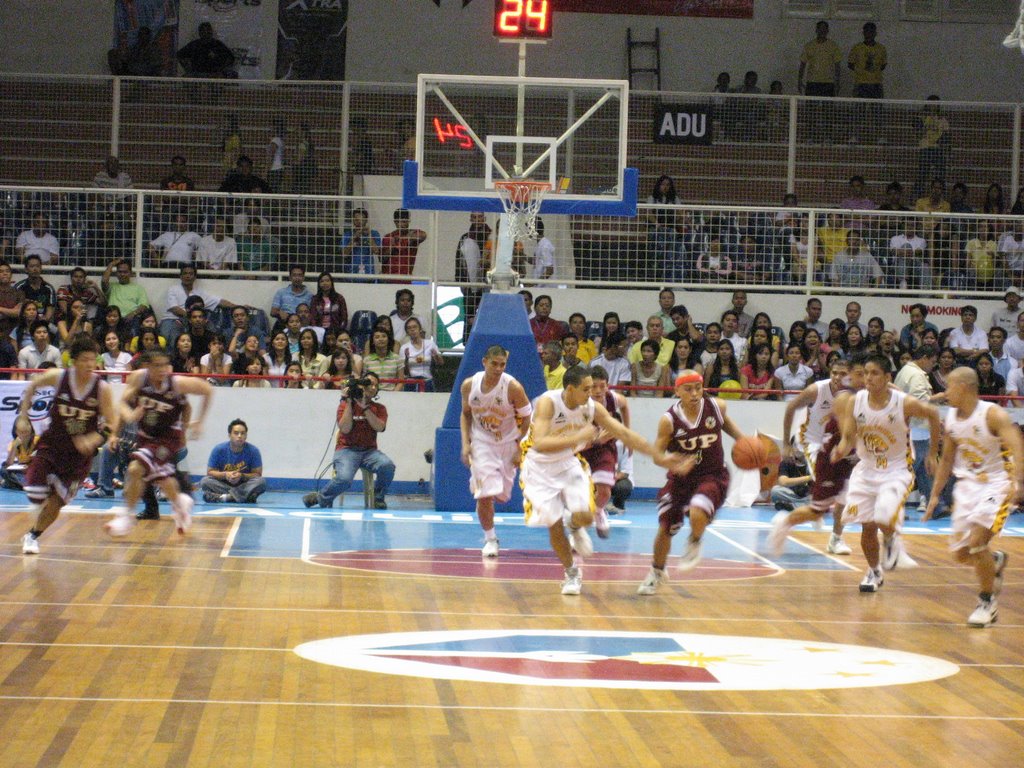
Only 4 of the twelve were returning players; the rest were rookies—bright-eyed, skittish, and alternating between excited and nervous. They were a small bunch. When they did the regulatory round robin, they looked puny compared with the UST beanpoles. “Maliit pala tayo, no?” mourned my seatmate, a UP alum. He was perturbed by the two- to three-inch differential between the two squads.

So was I. The UST Tigers were bigger and more athletic, enjoying a deeper bench of 10 veterans: in fact, they were able to substitute an entire platoon in the first half. But I have been a coach’s wife for twelve years to know that the biggest factor in any game is a good coach. And that the Fighting Maroons have: three coaches unafraid to lose their jobs to do what is right.


Under these coaches' care, the boys became steeped in the basics and technicals. They bled Maroon.


The boys suffered first two quarters of bad calls—so bad that in some instances the entire UP bench exploded to their feet, head coach Joe Lipa almost stormed the commissioners’ table, and The Coach stomped to the technical committee with his drill board. But no amount of hairline refereeing could have doused the fires out of the boys.

It was a cardiac game. The first half ended with UP leading by only two points: 45-43.


Which didn’t improve much by the end of the third quarter, with UP just one step ahead at 65-64.


The boys played like they weren’t rookies: Migs de Asis sunk in six triples, and Martin Reyes made four. At one point the UP team that ran the court was composed of four rookies and one sophomore.


The veterans did very well, too: Marvin Cruz—whose first step is quick and explosive—contributed 25 points (his highest in the amateurs, apparently), what with the plays designed for him in the mismatches.


Ira Buyco, my big bald baby, hustled well—which wasn’t limited to the usual rebounding and defending, but also included a stray [but legitimate] elbow here and there. In the game it was to Buyco that the young ones ran to to whine that so-and-so hit him, and Buyco would step up and give that so-and-so a piece of his, well, elbow. Tee hee.


It was pingpong basketball: the Maroons threw a 3-pointer, the Tigers responded. The Tigers sunk in a lay-up, and so did the Maroons. Yet another 3-pointer from the Tigers, and the Maroons followed suit: each side refusing to give in.

In the last two minutes, the score was skewed four points in favor of UP, partly due to the technical slapped on the UST head coach Pido Jarencio who barged into the court.


Which, alas, slipped to an even 92-92 in the final 12 seconds. The game was fast and furious, so much running and gunning. I couldn’t breathe anymore.


I wanted so much for UP to win its first game.

For Coach Joe Lipa, who is The Coach’s mentor, second father and ninong, from whom he inherited the reengineered swearword, “Pongalangala.” (There’s a story behind that. Tell you at another time.) These coaches love UP so much that they work even without pay. In the eight months that The Coach has dashed from his 9PM-5AM FedEx night shift to the 6AM UP practice before stopping for abbreviated sleep and then running to his 5PM St. Stephen basketball practice, UP paid him an allowance only thrice—a pittance not enough to cover his gasoline and food expenses.

But any one who is a purist about basketball knows coaching, like writing, isn’t about the money. It never was. The Coach is never happier than when he teaches college or high school kids who would dive for the ball. College ball is a coach’s game, where skills are taught and strategy pitted against strategy; professional basketball, on the other hand, is more of a players’ game. (Which is why The Coach wasn’t as happy when he did his PBA and MBA stints, though money was abundant. Then.)

Back to the game: UP had the ball in the last 12 seconds, and the score was even-Steven.


In the crucial huddle, Coach Joe directed the boys to spread the offense to give the best offensive player enough space to maneuver, the best being, of course, Marvin Cruz. Marvin dribbled a few precious seconds off the clock (to take the last shot and prevent UST from taking one), ran to the shaded area where three big men were waiting to pounce on him, leapt and shot the ball on a short jumper. It went in! The coliseum erupted in cheers, with less than one second remaining.

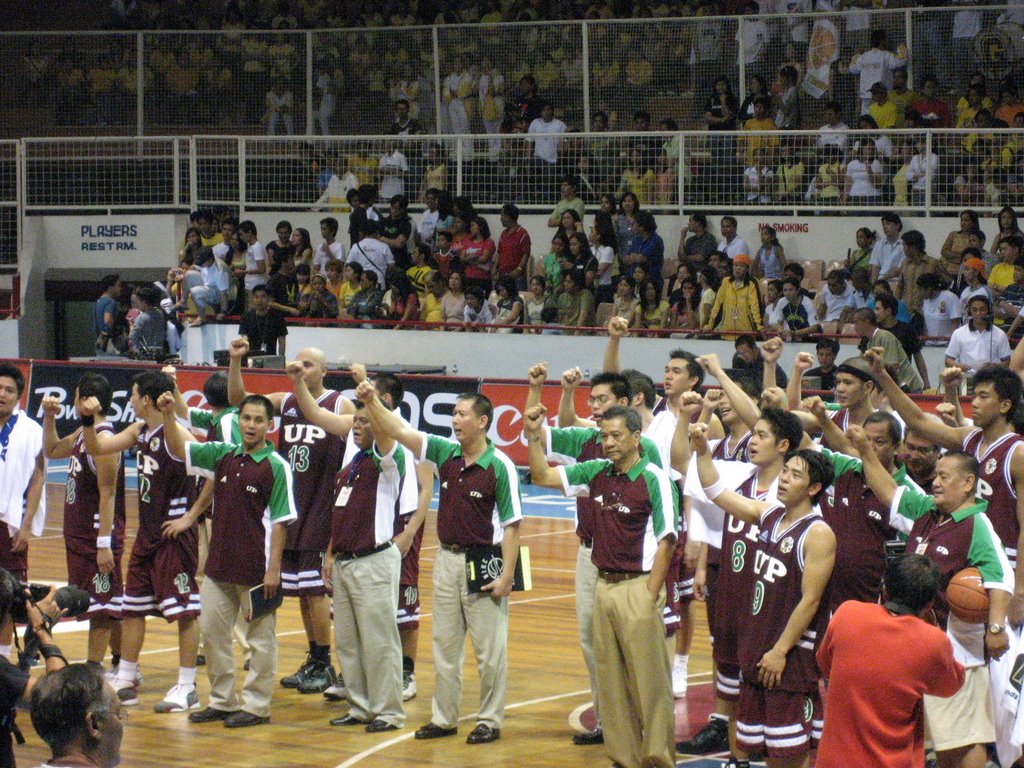
The Coach sang “UP Naming Mahal” like he always does—with conviction, even in the odd moments like when we’re in the car or in the house. He has never known another school except UP, he having been trained there since he was five years old.


Outside the Ninoy Aquino stadium, the moon joined the celebration, shining like a pearl.


Later, at the Zong resto at The Fort, the game gets even better in the retelling.

Saturday, July 08, 2006

Mouse Potato Adventures # 1

When you've got too much housework and so much to shake off from your mind, there's only one reasonable thing to do: reach for the mouse and hop from one site to the other, and you'd discover interesting stuff, like:
  • Niche is pronounced as nich or neesh.
  • Vincent van Gogh was a pastor's kid.
  • Magnatune delivers 60-minute, commercial-free podcasts of Rennaissance music.
  • Rubberneck is an intransitive verb that means "to look about, stare, or listen with exaggerated curiosity [e.g., 'Drivers passing the accident slowed down to rubberneck']."
  • Claire Messud is beautiful.
  • James Joyce's Araby is best read and heard.

Jejune

Oy. Been busy. Massively. Small things, big things, things I should’ve done but didn’t, things I shouldn’t but did. Did invisible writing, read a lot, mostly to get away.

The house looks disheveled, even with the soft lights and dimmers I use to hide the disarray. I let music flood our house. Silence can be cruel; it underscores thoughts unwelcome. So many things happening the past weeks: mostly happy, but some immensely hurtful. And it’s bewildering how the world marches on, remorseless, and doesn’t wait for me to marshal my thoughts, for me to be whole before I, too, move on.

Can’t really bother The Coach right now. His baby, the UP Fighting Maroons, plays its first UAAP game tomorrow. He has other things to mind. Besides, other than listen, there’s not much he can do to help me with my, well, funk. Worse, he might be too cheerful, like he almost always is, with his attitude of gratitude, which I know is true and honest and noble and right—but I don’t want cheer right now. I want to feed this glumness.

Saturday, June 03, 2006

A Father's Heart

My college friend, V, a photographer and artist, was born a fish. Even when I had a few years’ head start on him, he still takes to diving better than I do. He is unfazed by the weight of the sea, unafraid to take risks even when his decisions violate NAUI safety guidelines, as well as all the laws of physics. I was his buddy when he first dived in Anilao, and he should’ve paid me for that service for he kept speeding after every fish he fancied, parting away from us, and I had to tear after him to lead him back to the pack—no easy feat for he had a UP swim team’s body, built for speed.

When we dived Kho Tao, Thailand, our entire team had to do an emergency ascent after a mere ten minutes: we lost V underwater. He had seen something interesting and tore after it. His lust for life and all its beauty proved far too irresistible.

V is able to bear pain and when he severely hurt his back in Bohol, he still managed to don his tank for one last dive in Balicasag, never mind that I had to tow him for, oh, about forty minutes.

V is creative, funny and gentle in adversity: when our friend, B, fell into the sea together with V’s camera—one of the first (and very expensive) digital cameras that came out then—V, without missing a beat, hugged the dripping B. He knew B needed more assurance of their friendship than he did over the state of his very wet camera. And when the hard rains lashed at us when we emerged from the Coron seas, with waves that turned white and foamy, and pitched the boat to and fro, V kept us singing for the hour’s trip back to the resort all the songs that contained the words “rain” and “ulan.” And we sang, punctuated by thunder and lightning.

Yet there is an aspect of his life where V is unsure of his footing: fathering. For many years now, V has struggled with his eldest son, who claws at life, at anybody. Several times V finds himself trapped between a rock and a hard place. Disciplining his son is such a sorrow: How can V protect his son from his own wrong decisions? Often V finds himself giving up.

But not last night.

Last night V wrote us from Hong Kong, where he and his family have lived for over ten years. The Coach and I read his letter in silence, touched by V's father heart. I asked V's permission to reprint his email here.
Mga kapatid,

Last Friday, my elder son decided to leave home. My wife and I are not in favor of his relationship with his girlfriend because it is detrimental to both of them. The girl is not allowed in the house. On that day I caught them in his room.

My elder son has been making wrong choices in life because of this relationship. He is out of school at the moment, and his violent tendencies have been apparent. He has not been following house rules and advice. He is a total rebel. When he left, I did not decline.

For one whole week, I tried to be strong in my decision to let him go. In fact I locked the gate of the house when I leave so he cannot enter when nobody is home. He cannot take a bath, he cannot eat the food at home. I was hoping that by doing that he will learn his lesson, that it is difficult to be away from your family, that it is difficult to succeed in life without proper education, that life is not easy. He doesn't have money so I assume he cannot be mobile and will probably starve eventually. I thought in my mind, "How long can his friends support him?" All through the week, I was hoping that this experience will teach him life's lesson.

This afternoon, just after office hours (I usually extend my working hours), I received a phone call from him. He said "Papa, why is it that nobody is home? I need to get something from my room." I almost did not hear the other words he said—just the word, "Papa." The word "Papa" melted my heart; it sounded so beautiful to my ears.

That was a spiritual moment. Now I have an idea how God feels when we call him Father. I haven't finished everything I needed to do, but I told him to wait for me because I am on my way home.

If it has been a difficult week for him, so it was for me. I suddenly realized where the pain and frustrations are coming from. What if my colleagues know my son does not live with me anymore? I am supposed to be a good manager, why can't I manage my own son? What if he cannot finish high school in time, or not at all? What about university? Other people's kids are doing well, what went wrong with my son? And the list of questions goes on.

When I heard my son say "Papa," I know deep in my heart that I love my son. I still love my son even if he is a total rebel. I love my son even if he doesn’t get into the university. I still love him even if he does not perform. Children are not trophies, sabi nga ni B. I felt a sense of freedom. Ngayon, alam ko na talaga ang meaning ng unconditional love. Our relationship with our Father God is the same. Even if we, His children, will go astray, it doesn't mean that He will cease to love us.

I will be patient. I will wait. My son is coming back. If I think this way towards my son, I wonder how God feels towards His children.

This night at home, I asked my son if he would like to eat out with me. He said he already had dinner. I told him to sleep in his room tonight: his mother will be arriving tomorrow from New York and his aunt has something for him. I know he was just waiting for the invitation. He went inside his room and sprayed some fragrance. He said he didn't like the smell. Then he asked for two hundred dollars. I gave him two hundred dollars. I felt like I gave him only two ten dollar bills. I wanted to give him some more. After putting the money in his pocket, he said he has to go but will be back. I asked him what time is he coming home. He said, before twelve.

I am not sure if my son has learned his lesson, but I'm quite sure I did.

V